Books

Expanded online edition · By Hiran Alwis

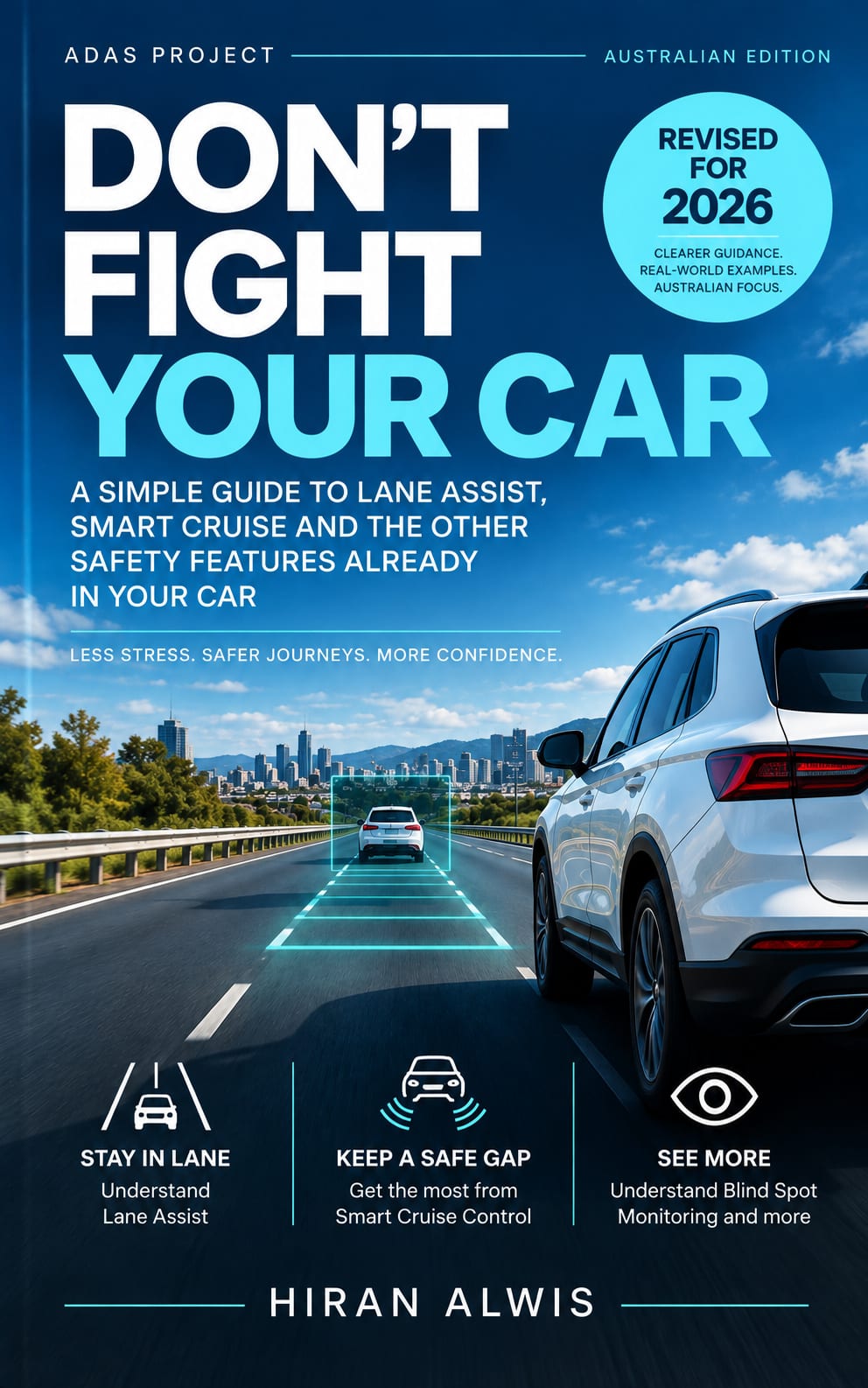
Don't Fight Your Car

The Australian driver's plain-English guide to ADAS, safety technology and modern cars.

A modern car should not feel like an argument

This book is for drivers who have been startled by a steering correction, frustrated by a dashboard warning or tempted to switch every assistance feature off. It explains what the car may be trying to do, where the technology can help and why the driver must remain ready to take control.

The online edition is written for Australian roads and is being expanded as vehicle technology, safety assessment and regulation develop.

Online book

Contents

21 practical chapters, reviewed for current terminology and responsible use.

Understanding the car

  1. 01
    Why Your Car Isn’t Broken... It’s Misunderstood

    Why modern cars warn and intervene, and why unfamiliar assistance can feel more hostile than helpful.

  2. 02
    ADAS in Australia Today

    Driver assistance, automated driving, Australian vehicle standards and the responsibility that remains with the person behind the wheel.

  3. 03
    How the Car Sees the World

    Cameras, radar, ultrasonic sensors, LiDAR and the reason modern vehicles combine more than one view of the road.

  4. 04
    What Else Is Out There? A Quick Guide to ADAS Features

    A plain-English map of common, advanced and emerging driver-assistance features.

Everyday ADAS features

  1. 05
    How Lane Keeping Actually Works

    The important differences between lane-departure warning, lane keeping and lane-centring assistance.

  2. 06
    Smart Cruise – The Most Underrated Stress-Reducer

    How adaptive cruise manages speed and following gaps, where it helps and where the driver must intervene.

  3. 07
    Automatic Emergency Braking — A Last Line of Assistance

    What AEB can attempt, why its performance varies and why it must never be deliberately tested on public roads.

  4. 08
    Blind Spots and Cross-Traffic Assistance

    How blind-spot monitoring, rear cross-traffic alerts and related interventions support—but never replace—direct observation.

  5. 09
    Parking and Reversing Technology

    Reversing cameras, parking sensors, 360-degree views, cross-traffic alerts, reverse braking and the blind areas that remain.

  6. 10
    Driver Monitoring, Attention and Fatigue Warnings

    What driver-monitoring systems measure, why warnings can feel personal and why monitoring is not a medical assessment.

  7. 11
    Night, Weather and Visibility

    Why rain, glare, fog, smoke, dust, darkness and confusing road markings change what assistance can reliably perceive.

  8. 12
    Traffic, Junction and Highway Assistance

    The combined systems that support congested traffic, highway travel, junctions and lane changes—and the supervision they still require.

Living with an ADAS vehicle

  1. 13
    When to Trust ADAS – and When to Override It

    How to recognise suitable conditions, remain in control and take over without turning a limitation into a hazard.

  2. 14
    Top 5 Reasons People Turn It Off – and What to Do Instead

    Why drivers reject assistance and the safer, more useful options to try before permanently switching it off.

  3. 15
    Software Updates and Changing Vehicle Behaviour

    Why assistance settings and behaviour can change after updates, repairs, recalls or resets, and what owners should record.

  4. 16
    Sensor Care, Towing and Accessories

    How dirt, damage, tow bars, bullbars, racks, suspension changes and other modifications can affect assistance systems.

  5. 17
    When ADAS Fails – Act Fast, Stay Safe

    What to record, inspect and ask for when a warning, collision, repair or changed behaviour affects ADAS.

Choosing and using ADAS safely

  1. 18
    Buying a Car with ADAS – What to Look For

    A practical new-and-used vehicle checklist that looks beyond feature names and sales claims.

  2. 19
    How to Help Someone You Love Stop Fighting the Car

    How to explain unfamiliar assistance without jargon, pressure or unsafe demonstrations.

  3. 20
    The Three Phases of Becoming ADAS-Confident

    A calm path from distrust to informed, supervised use without hazardous experiments.

  4. 21
    The Future Without the Hype

    How increasingly capable assistance differs from automated driving and why feature names must never replace an understanding of responsibility.